
Ghent is one of Belgium’s major cities, and I have to admit that I didn’t have particularly high expectations of it, especially after experiencing the fairytale charm of Bruges not once, but twice. Still, I’m always curious to discover somewhere new. So, during my last visit to Belgium I decided to make a plan for visiting Ghent.
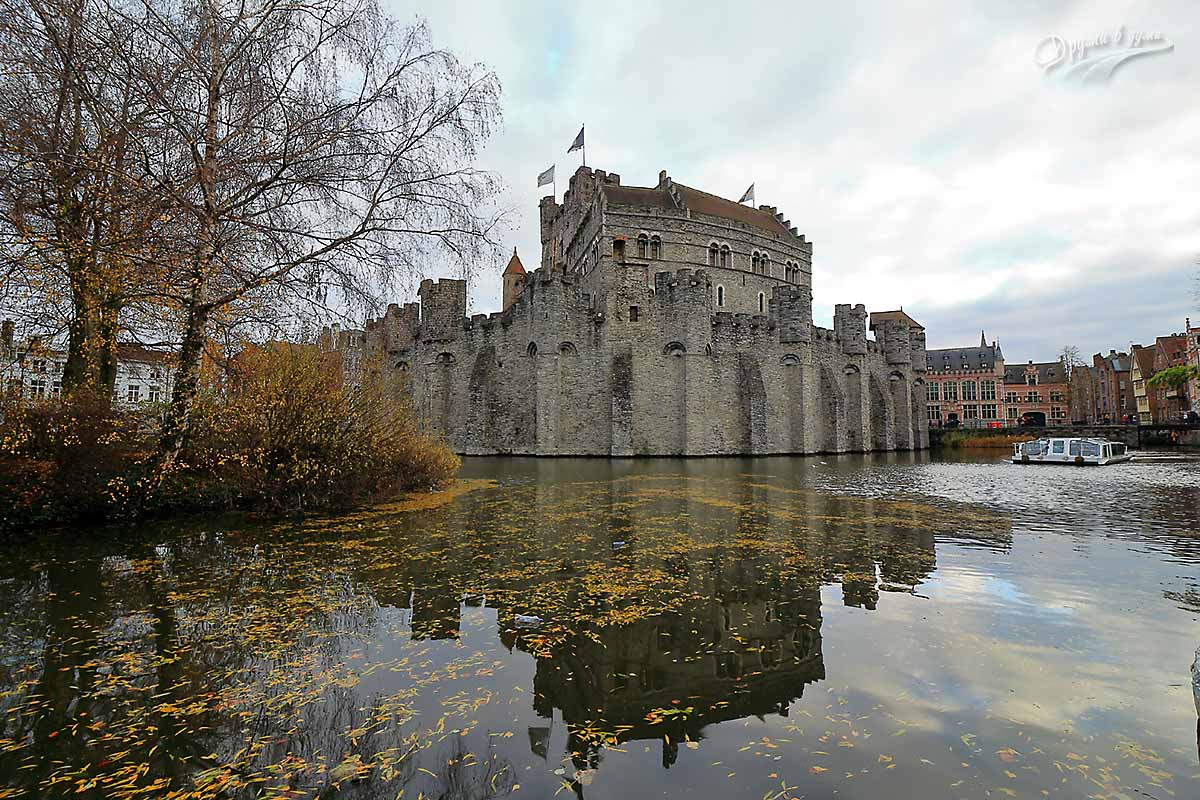
I started researching the places worth seeing in Ghent and soon realized that there was actually a lot to explore. Even so, I remained slightly skeptical. I kept thinking that after Bruges, it would be hard for anything else to surprise me.
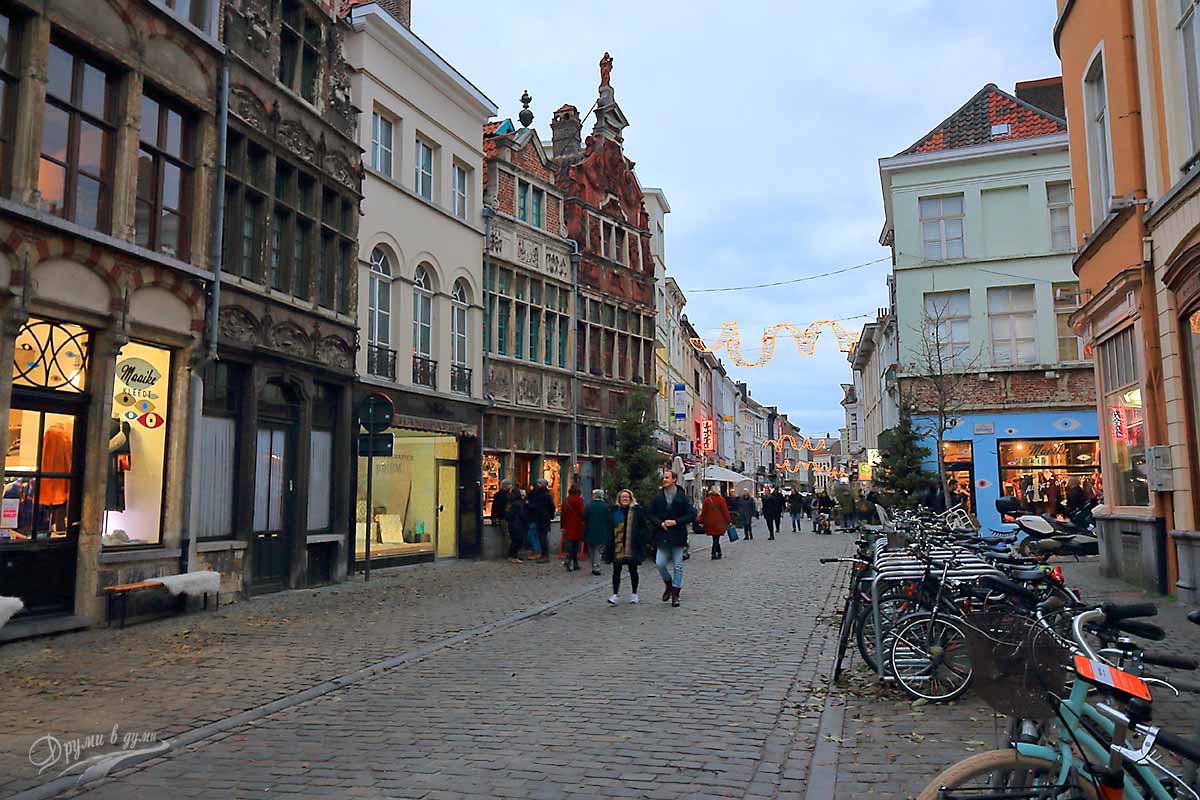
Now, some time after spending one day in Ghent, I have to admit that I was wrong. The city turned out to be fascinating and unique in its own way – with its beautiful buildings, canals, castle, and atmosphere. It felt like a medieval echo set against the lively backdrop of modern-day life, with locals and tourists filling the streets.
In this article, I’ll share the highlights of our one day in Ghent and some of the things I learned about the city. I’ll also share a little-known terrace offering, in my opinion, the most beautiful view of Gravensteen Castle.
Table of contents
How to get from Brussels to Ghent
From Gent-Sint-Pieters to the City Center
One day in Ghent – landmarks and attractions
Final thoughts
How to get from Brussels to Ghent
Ghent lies in the northern, Flemish part of Belgium, about 56 kilometers northwest of Brussels. The journey takes around 50 minutes by car or about an hour by train. We chose to travel by train.
If you decide to rent a car, check here the best car rental options in Belgium.
I have traveled extensively on the Belgian railway network and can say that it offers excellent coverage at very reasonable prices (even by our standards). For instance, there are direct lines from the airport to all major cities, running several times a day. The capital, Brussels, has three railway stations. Perhaps that is why Belgians travel so much. When I am abroad and need to travel outside the capital city, I usually choose the train; I find it more comfortable and spacious than a bus. That is how I got to Ghent – by train.
You can check the Belgian Railways website for schedules and fares. Tickets can be purchased directly at the station or via the website .
Ghent’s main railway station is St. Peter’s (Gare St. Peter).
From Gent-Sint-Pieters to the City Center
The most convenient way to get from the station to the city center is by tram number 1; the ticket costs 3 euros.
Speaking from personal experience, Ghent can be a bit tricky to navigate at first, as all signs are in Flemish. On the other hand, whenever I needed to ask locals for information or directions in English, I had absolutely no trouble.
In addition, all the main attractions are located in the historic center, very close to one another. Once you are there, it is impossible to miss the interesting sights.
One day in Ghent – landmarks and attractions
Ghent is the capital of Belgium’s East Flanders province and home to around 260,000 people. Its unique combination of medieval architecture, waterways, and vibrant modern life makes it one of Belgium’s most fascinating cities to explore. The Leie and Scheldt rivers meet here, and the city’s name is believed to come from the Celtic word Ganda, meaning “confluence.”
Here I’ll tell you how I experienced Ghent during a day trip to the city. Before the trip, I had done some research online about the city’s main sights and had a plan in mind, but it gradually expanded as we went along.
It was a Saturday in early December. We took a train from Brussels and got off around noon at Gent-Sint-Pieters railway station. We left the station and started looking for the tram stop. It turned out to be right in front of the station, slightly to the left of the square outside.
Tram No. 1 was just arriving, but we didn’t have tickets. We also wanted to check its route, just to make sure we were heading in the right direction. So we decided to wait for the next tram, which, according to the electronic display, was due in 20 minutes.
We used part of the waiting time to take a stroll around the square in front of the station, passing by the trees with their unusual, almost sculptural crowns.
We boarded the tram, bought our tickets on board, and travelled for almost half an hour to the city center. The tram was packed.
We got off at Korenmarkt, the last and first stop of the line in the city center. And that’s where our exploration of Ghent began.
The Belfry of Ghent (Belfort)
The first place we visited during our one day in Ghent was the over 90-meter-high Belfry. It was one of the main stops on my plan and turned out to be very close to the tram stop where we got off. So, it seemed like the perfect place to start.
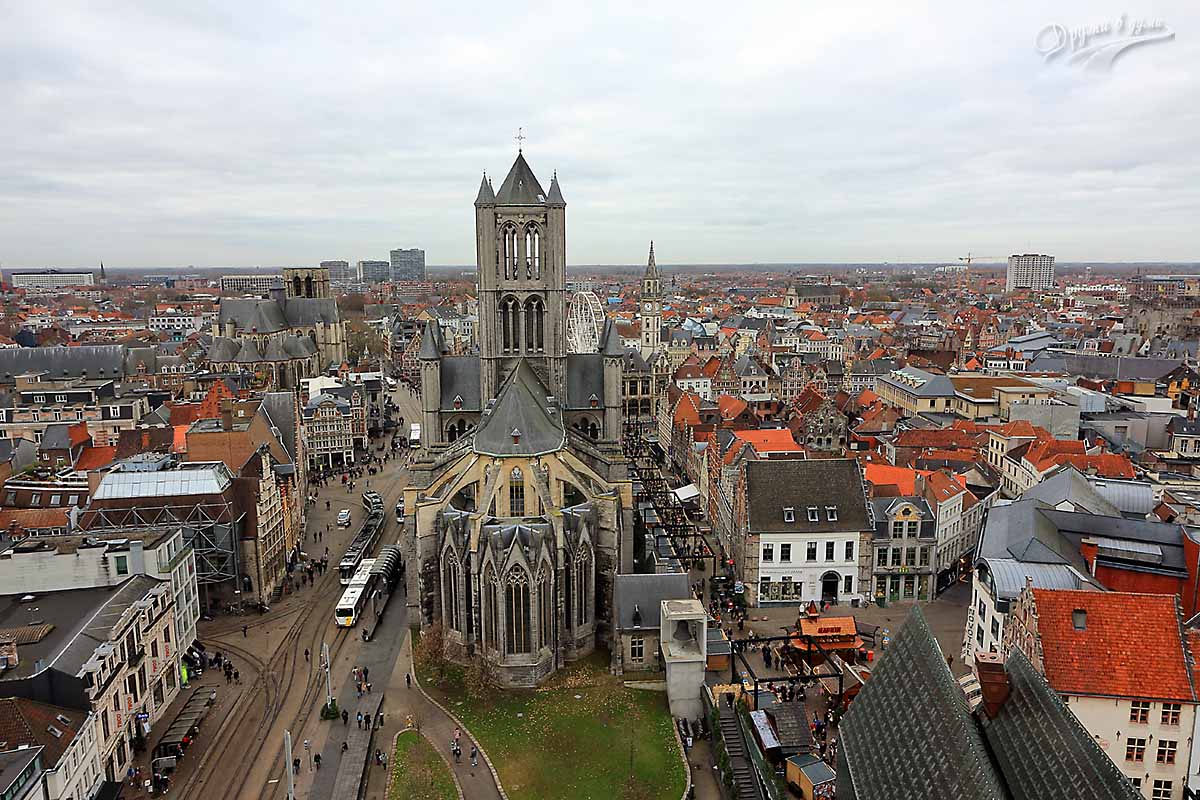
The Belfry is a UNESCO World Heritage Site and the middle one of Ghent’s three iconic towers. The other two are just a short walk away – the tower of St Bavo’s Cathedral and the tower of St Nicholas’ Church.
Construction of the Belfry began in 1313, but it was not completed until 1380, due to various troubles that affected the city during that period, including wars, plague, and political upheaval.

The tower is a symbol of Ghent’s independence. Today, it houses a museum, and you can climb almost all the way to the top via a very narrow and steep spiral staircase to enjoy panoramic views over the entire city.
Modern times have added one convenient feature to the tower’s interior: a fast elevator. However, it only takes you part of the way, so you still have to climb the stairs at the very bottom and near the top.
A ticket costs €13.
We climbed all the way up using the narrow staircase and took the elevator on the way down. The climb is challenging not only because there are so many steps, but also because the staircase is so narrow that passing other visitors can be quite difficult.
We had a similar experience a while ago in Tallinn, when we climbed the tower of St Olaf’s Church.
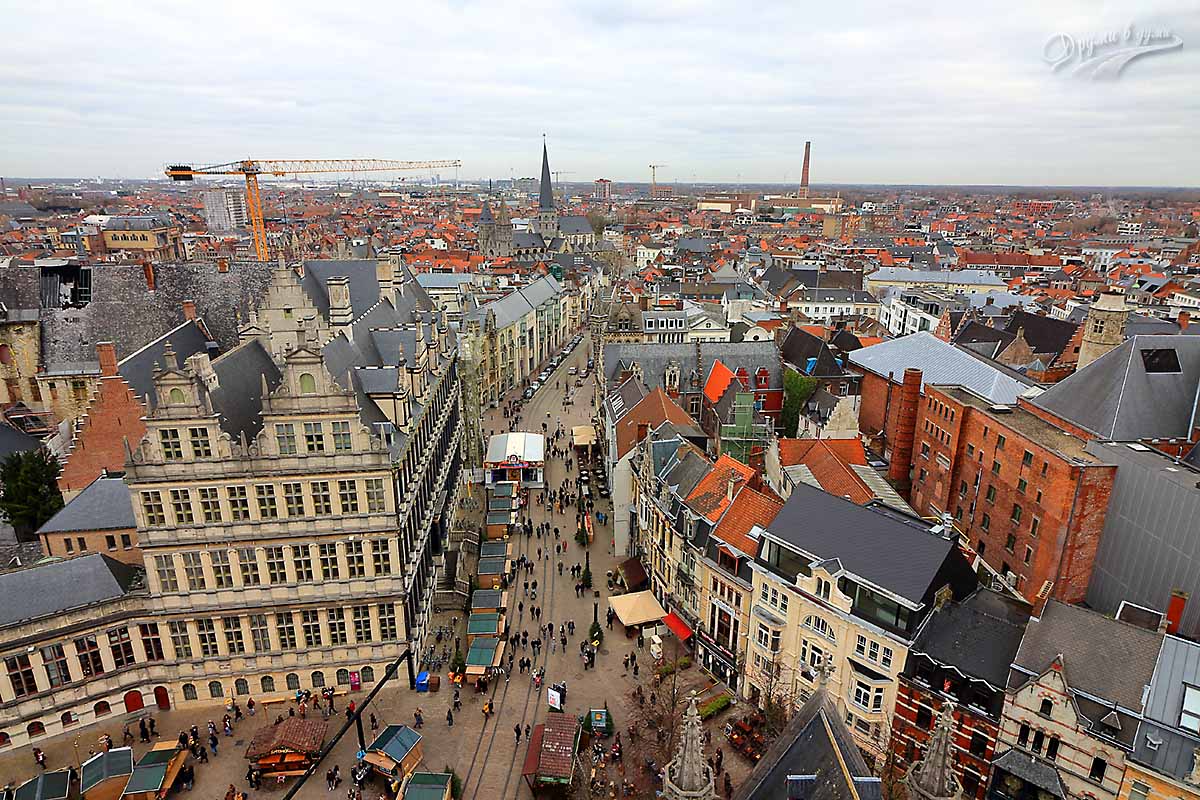
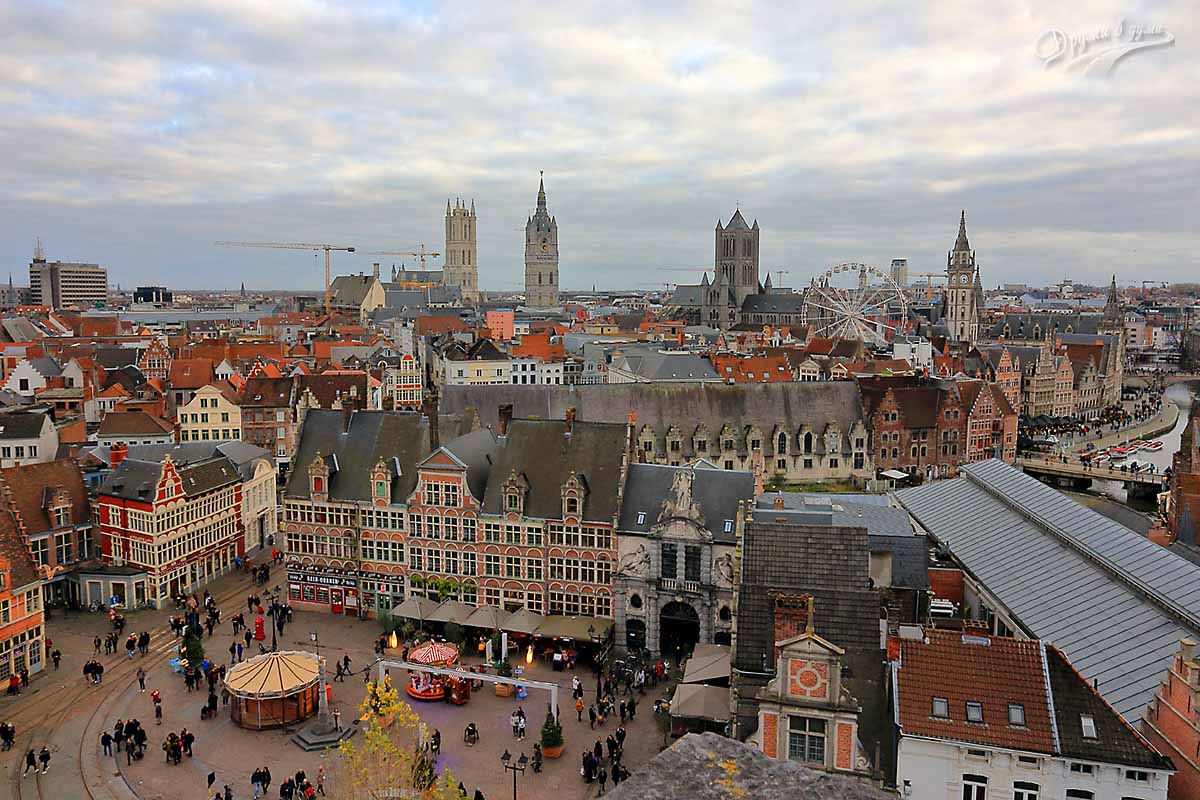
The views from the top are impressive. Starting our day here turned out to be a great idea because the panoramic views in every direction helped us get our bearings and understand where everything was in relation to the rest of the city.
St Bavo’s Cathedral (Sint-Baafs Cathedral)
After the Belfry, we went inside Ghent’s magnificent Gothic cathedral, St Bavo’s. Admission is free.

Construction of the cathedral began in 1274 on the site of an old wooden chapel dedicated to St John the Baptist, which had been consecrated in 942.
St Nicholas’ Church (Sint-Niklaaskerk)
The church is almost cathedral-sized and is one of Ghent’s oldest and most iconic landmarks.
St Michael’s Bridge
After visiting the church, we headed towards the river and crossed St Michael’s Bridge, built next to the church of the same name. The bridge is another Ghent landmark and offers a wonderful view of the city’s three famous towers I mentioned above.
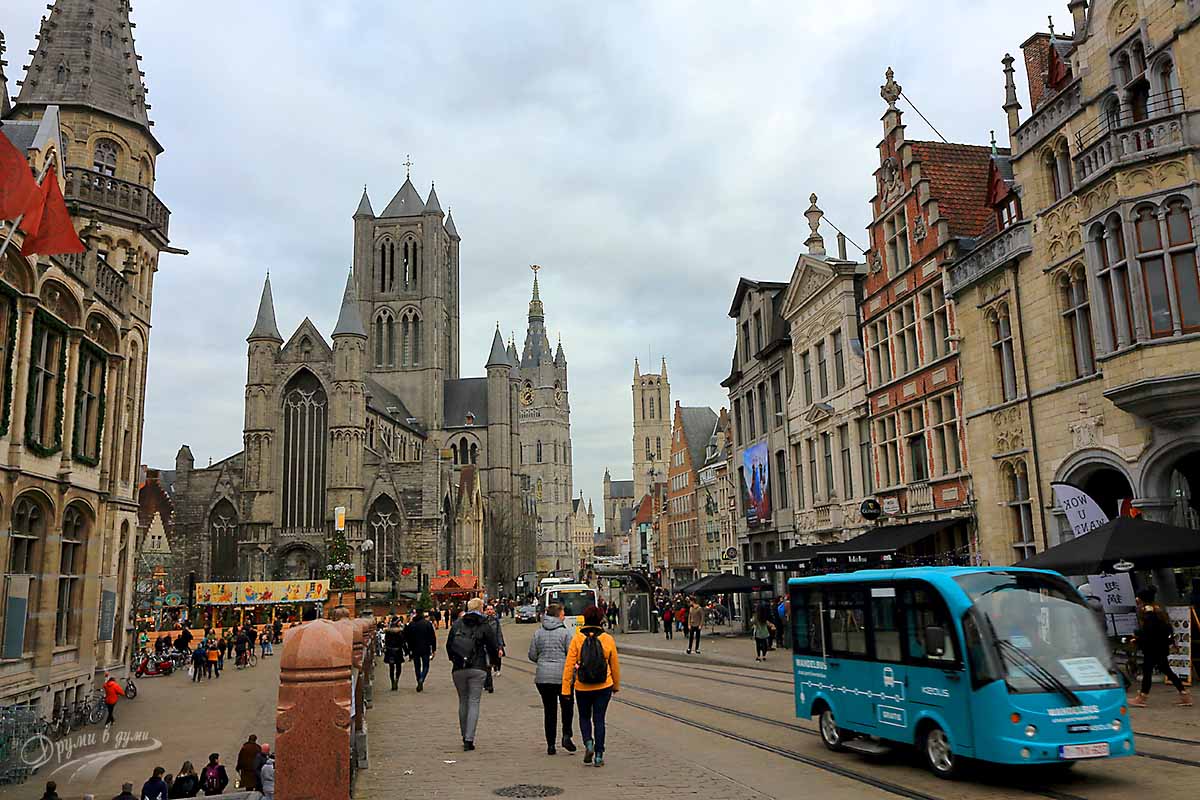
Its current Neo-Gothic design dates back to 1913, when Ghent hosted a World’s Fair that led to extensive renovations and the construction of several landmarks across the city, including Gent-Sint-Pieters railway station and St Michael’s Bridge.
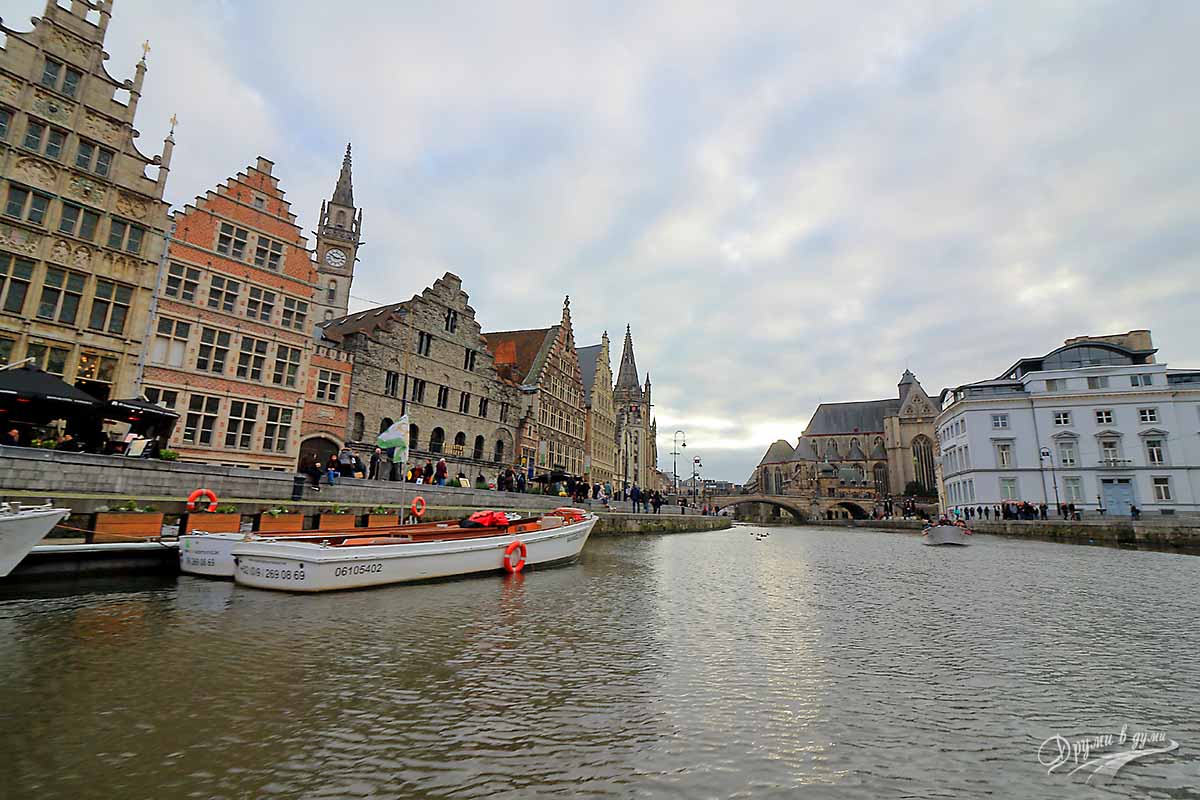
Graslei and Korenlei
St Michael’s Bridge connects the two waterfront streets, Graslei and Korenlei. Along them, you’ll find beautiful historic buildings in traditional Flemish style – narrow but tall, with stepped gables and ornate details.
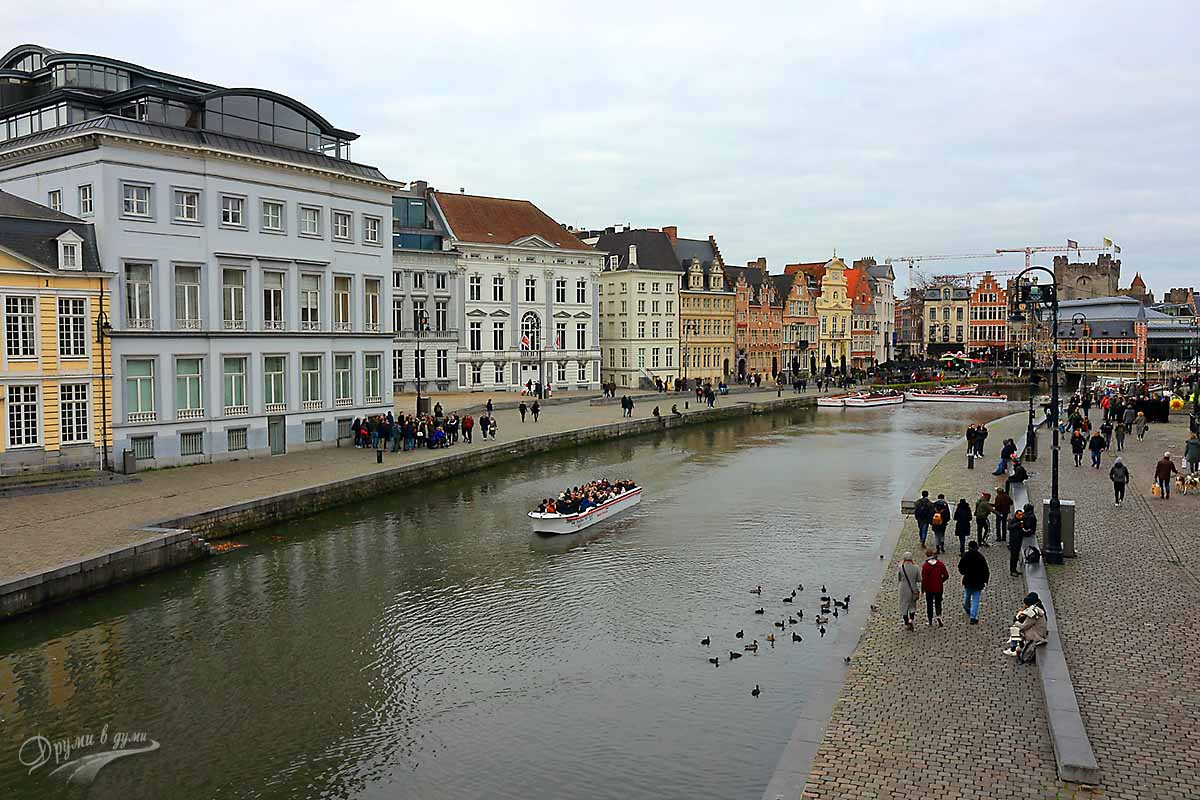
In the past, Graslei and Korenlei were two quays on opposite sides of the river, forming part of Ghent’s medieval port.
Gravensteen Castle
During the 11th and 12th centuries, Ghent grew into an important commercial center, largely thanks to its thriving cloth industry, which relied on imported English wool. It was during this period, in 1180, that the impressive Gravensteen, or Castle of the Counts, was built. By the 13th century, Ghent had become one of the largest cities in Europe, with around 60,000 inhabitants – second only to Paris and even larger than London at the time.
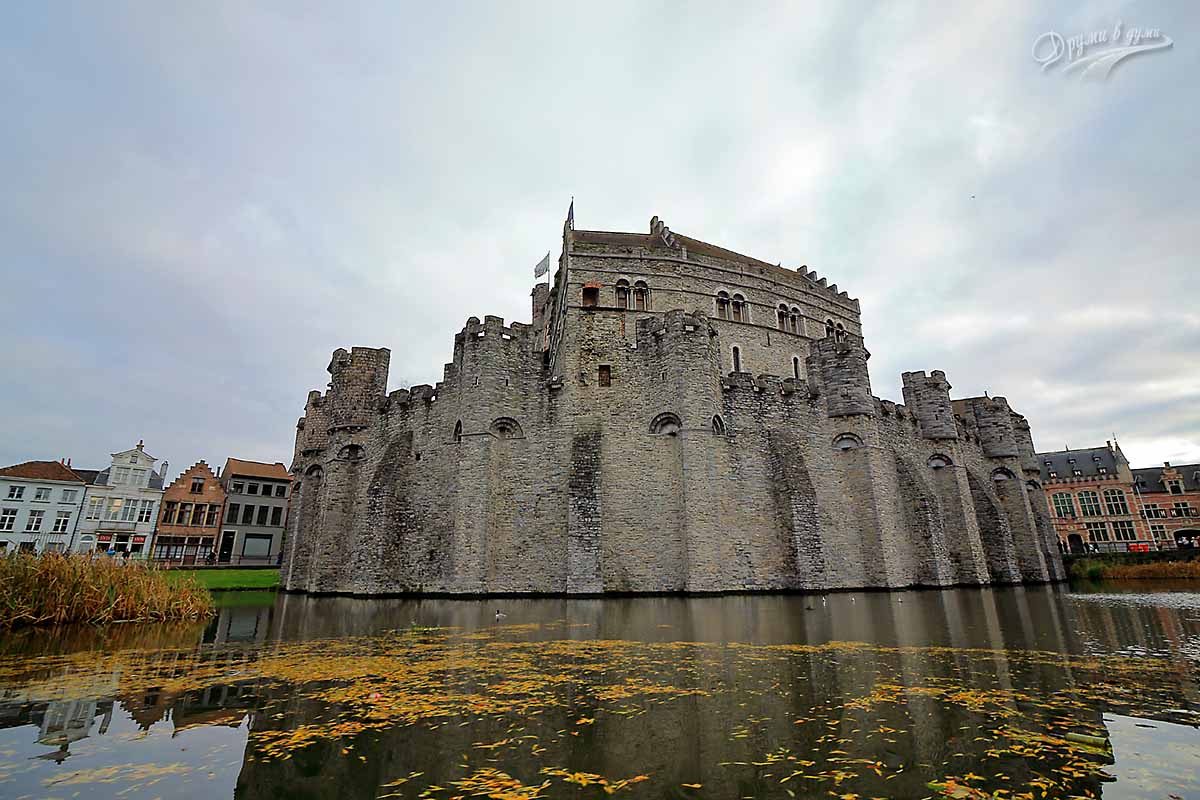
Today, Gravensteen is one of Ghent’s main attractions. The castle stands on the banks of the river, and visiting it feels like stepping back in time and getting a sense of life in long-forgotten eras.
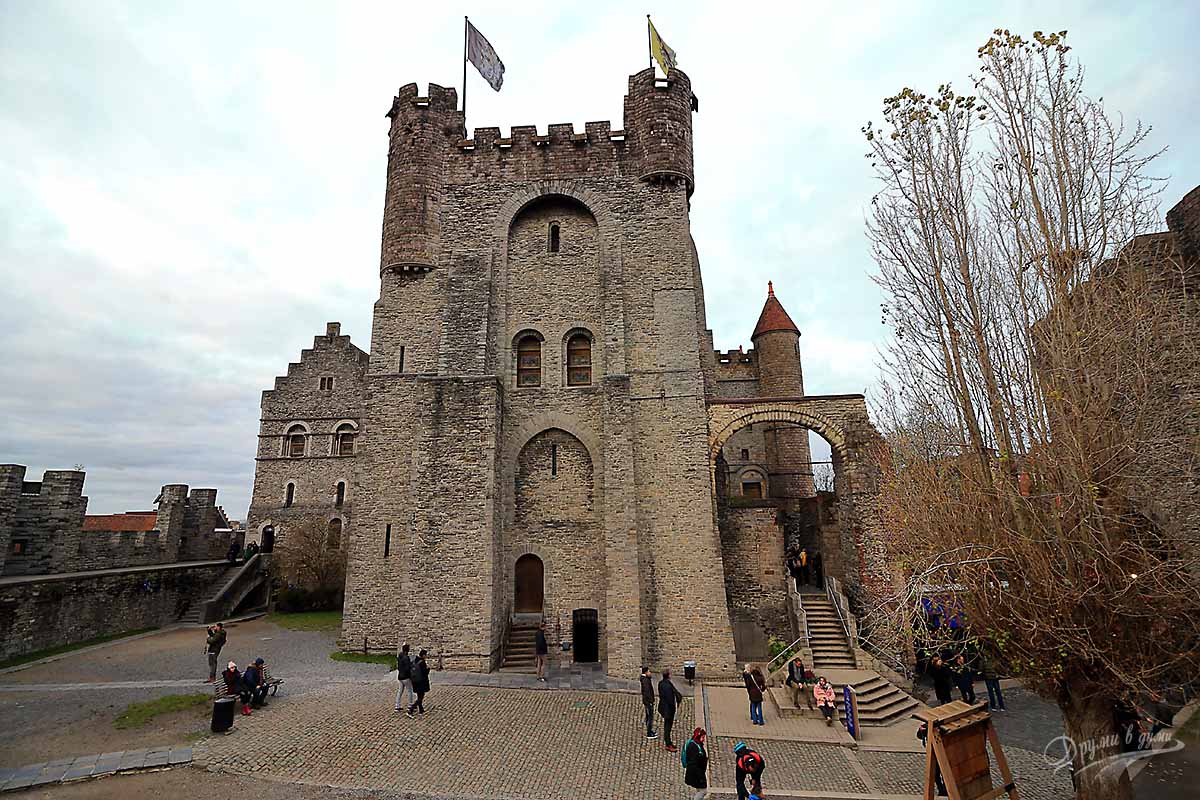
These sensations are brought to life both by the castle’s authentic medieval setting and by the narrated commentary playing on the audio guides for tourists. Truly impressive.
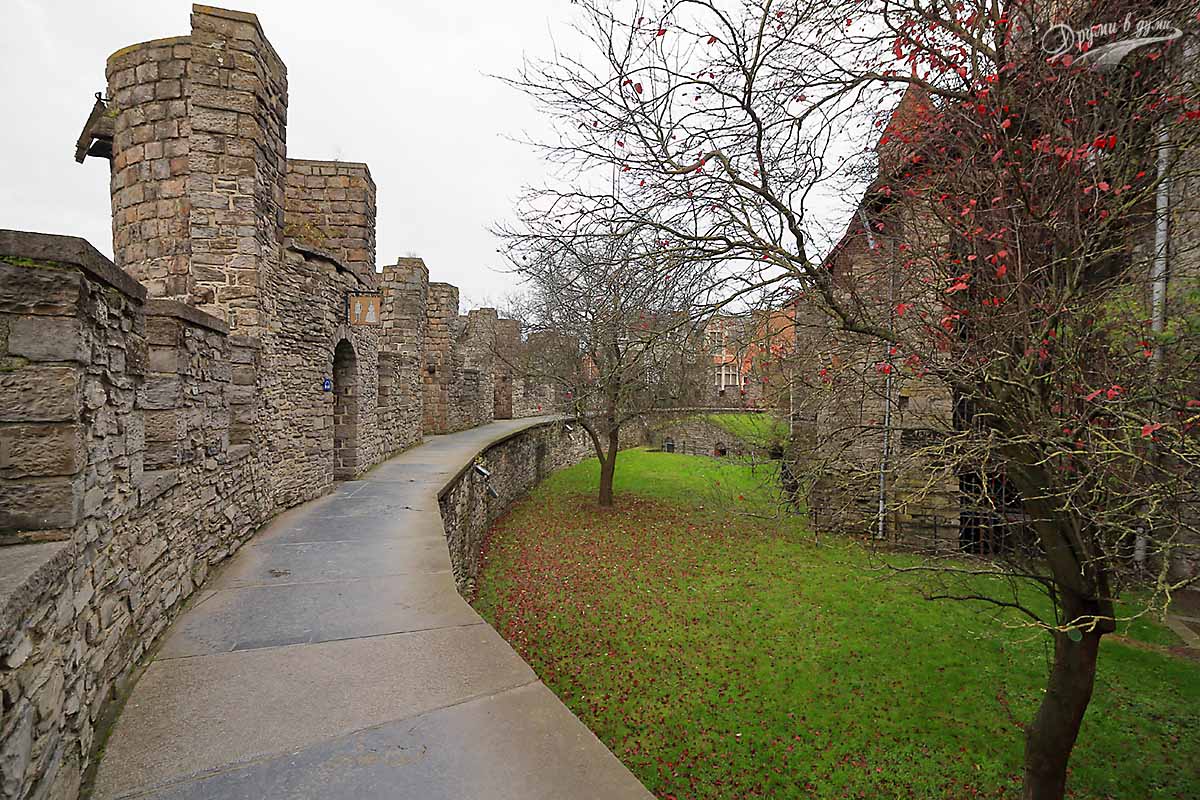
In addition, the upper levels of the castle offer beautiful panoramic views over the city.
A ticket to Gravensteen Castle costs €15. I recommend allowing at least an hour to an hour and a half for your visit. The entrance is at the corner of Burgstraat and Geldmunt.
By the way, it turns out that Belgium has more medieval castles per square kilometer than any other country in the world.
A Viewpoint Overlooking Gravensteen Castle
Let me also share a lesser-known viewpoint overlooking the castle.
To get there, cross Burgstraat shortly before the bridge leading to the castle and take the first street parallel to the river. Walk a few meters along it, then turn right at the first side street. It will lead you down to the river.
There, you’ll find a small terrace with a lovely view of Gravensteen Castle. The approximate coordinates of the terrace are 51.057612, 3.719908.
Boat Tour
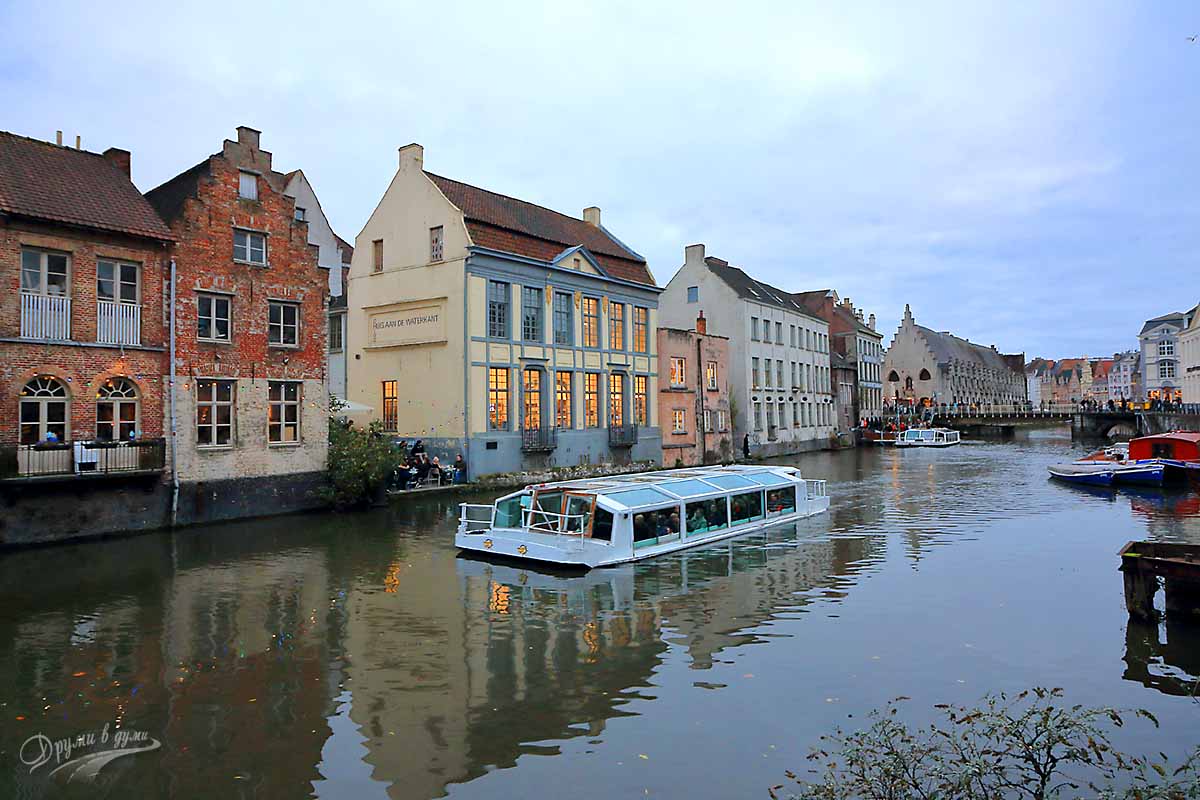
One of the most interesting and fun attractions we tried in Ghent was the boat trip along the Leie River. I highly recommend it. Near St Michael’s Bridge, tourist boats depart from both banks of the Leie River, taking visitors past the main sights along the river in Ghent’s historic center.
The commentary is available in several languages, and the boat ride is a wonderful and relaxing way to explore the city from a different perspective. The boat tour costs €10 and lasts around 50 minutes. We really enjoyed it.
Want to experience Ghent from a different perspective? Book your river cruise in advance here.
Ghent Squares
As you explore Ghent’s city center, you will inevitably come across some of the city’s historic squares, which are attractions in their own right.
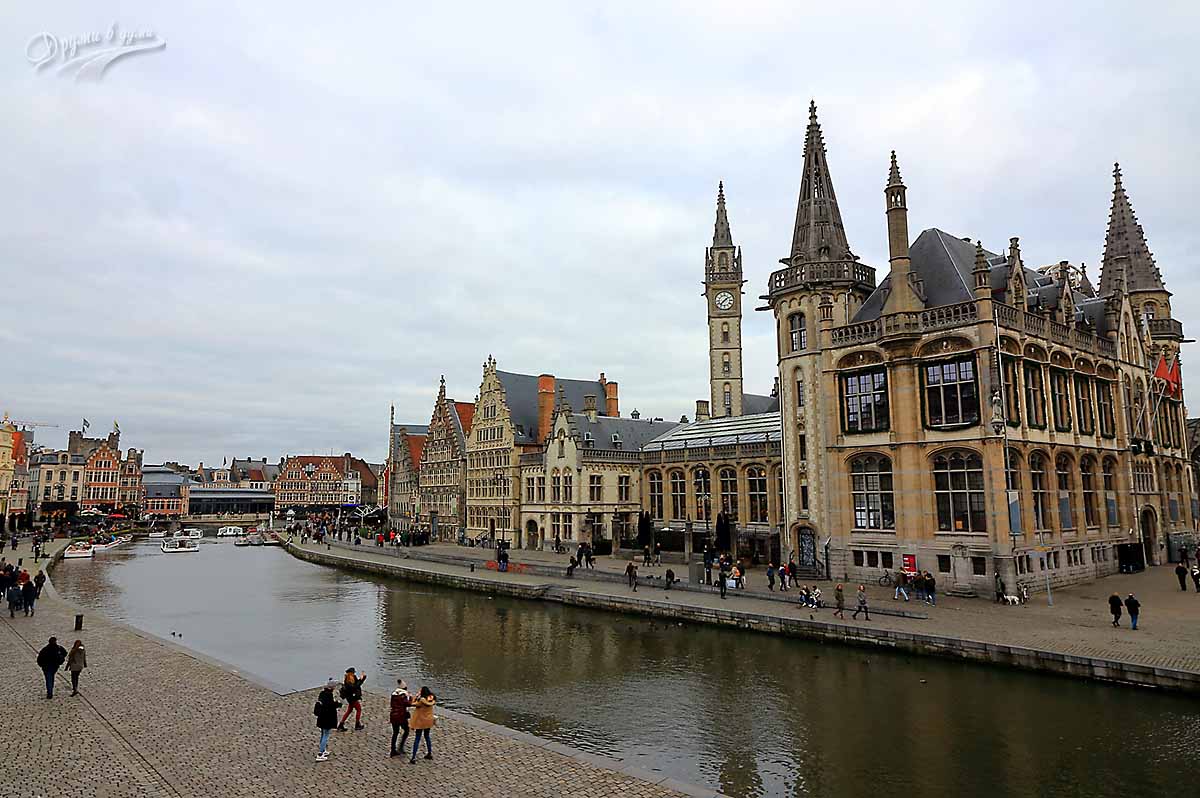
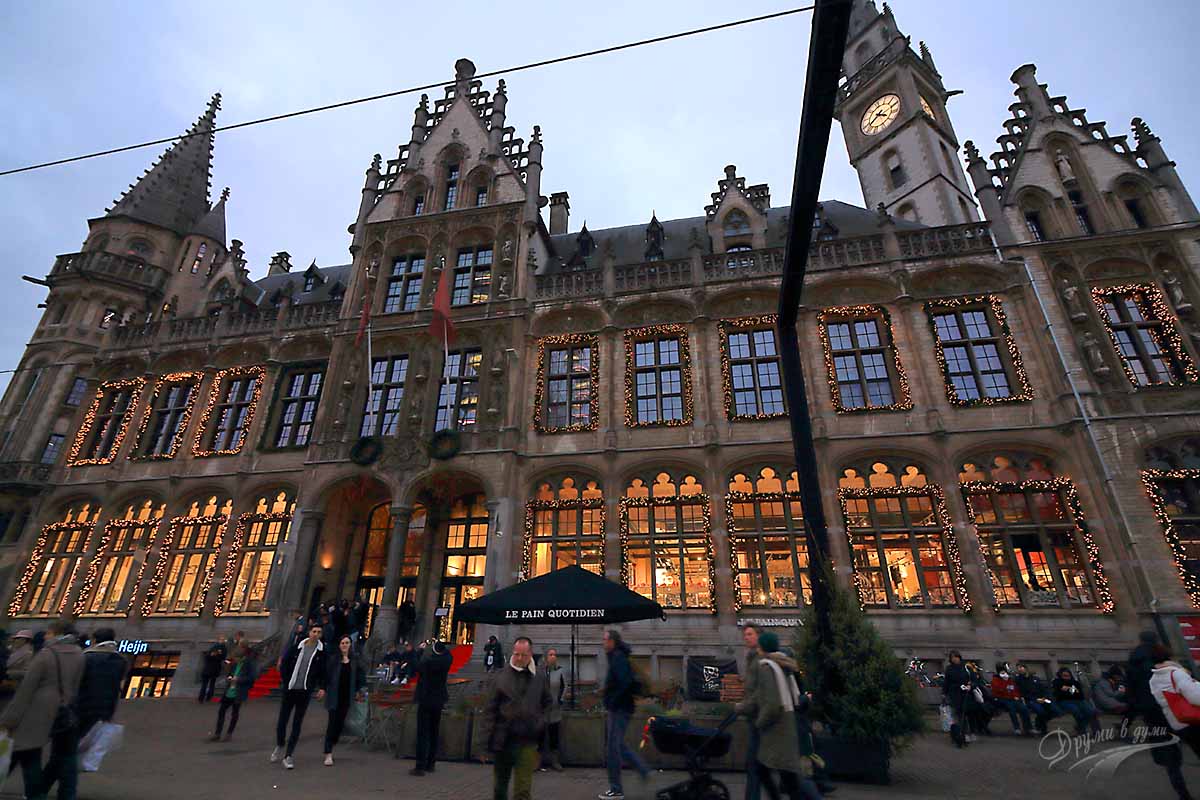
Korenmarkt is one of them. Located close to the river and St Michael’s Bridge, the square is also home to another iconic building – the former post office. Today, the building houses a beer bar, shops, and a luxury hotel.
For more information about Ghent, visit the city’s official tourism website.
Final thoughts
After spending one day in Ghent, I really liked the city. A lot. Maybe because I didn’t have particularly high expectations, yet the city had so much to offer. Maybe because the weather was kind to us on that December Saturday, especially after we had been soaked and nearly blown away by the wind in Lier and Antwerp the day before. But most of all, because Ghent is a beautiful city filled with fascinating places, shaped by its rich and centuries-old history.
If I ever get the chance, I’d love to visit Ghent again in a different season for a change.


It was quite useful to read your article about Ghent! Thank you!